Using Airway Adjuncts
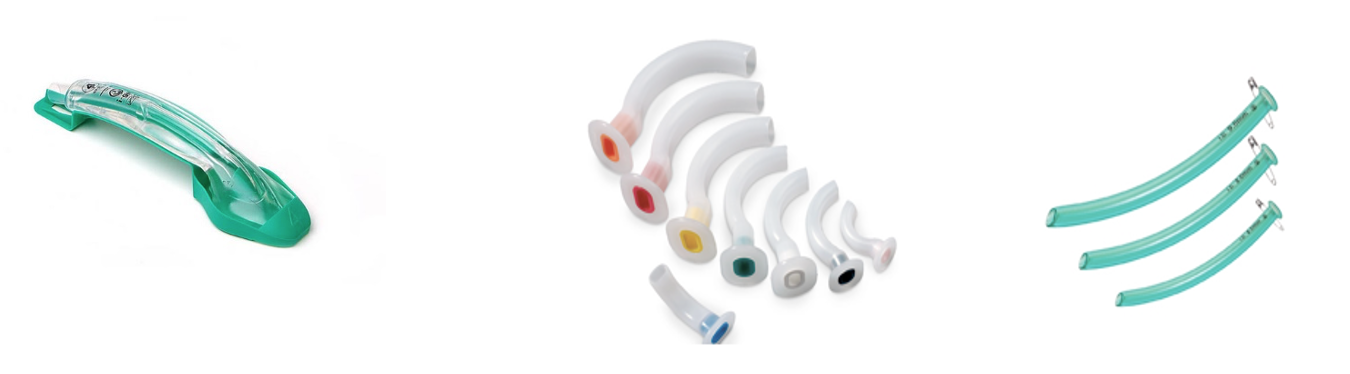
Airway adjuncts allow the airway to be maintained without the need for manual holding as is required with basic techniques.
The two options available are:
- Oral airways (oro-pharyngeal airways go in the mouth)
- Nasal airways (naso-pharyngeal airways go in the nose)
- I – Gel (in the mouth)
Use alternating series of 5 back blows and 5 abdominal thrusts 3 SETS
CPR is to be started when the suspected choking casualty has collapsed.
Oral airways
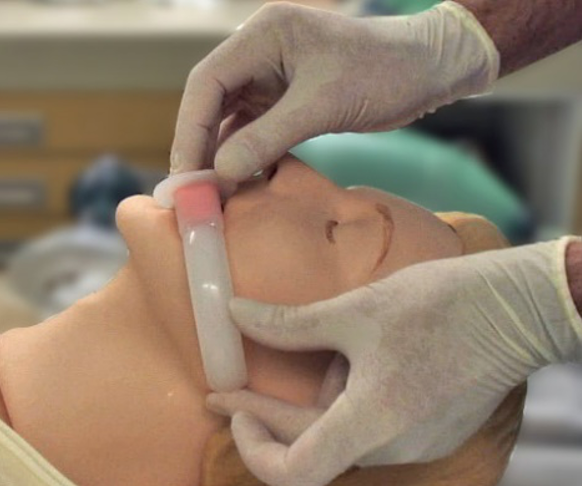
Guedel airways are the most commonly used:
- Simple to assess size - point of jaw to centre of teeth
- Easy to insert - upside down and twisted into place
- Easily ejected by a casualty drifting out of unconsciousness – safe!
- Prevent tongue from blocking airway
- Can be used with a bag, valve and mask
- Ideal for use in those casualties where oral airway needs to be maintained, but where there is possibility of rousing from unconsciousness
Does not prevent vomit etc. from entering the airway
Nasal airways
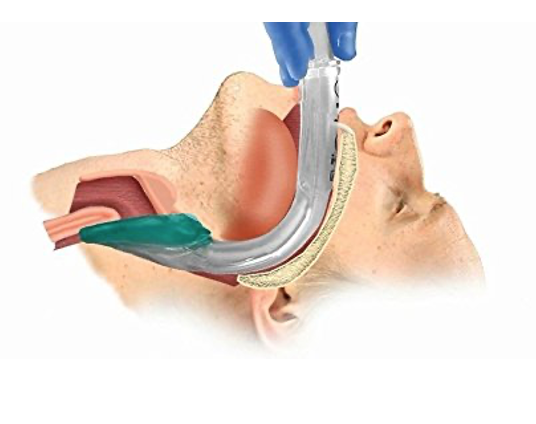
- Ideal for use where the mouth is considered to be unsuitable
- Simple to insert, very safe to use
- Choose size
- Lubricate
- Head in ‘sniff’ position – press end of nose up
- Insert gently, vertically with purpose
- If resistance felt then withdraw and try other nostril
- Ensure air is passing through
- Will usually be tolerated by semi-conscious, even fully conscious, casualties
- Can be used with bag, valve and mask
• Does not prevent tongue from blocking airway
• Does not prevent vomit etc. from entering airway
• Do not use where there is nose damage/bleeding
I-Gel:
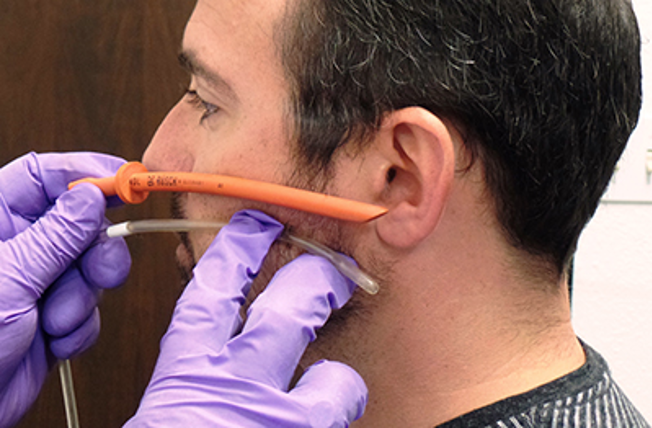
- Ease and speed of insertion
- Reduced trauma
- Superior seal pressure
- Integral bite block
- Non inflatable cuff
• Weight guide on front of I-Gel
• I-Gel requires lubrication before insertion
No technique is guaranteed to work, return to the basic techniques.
The very best airway protection that any first aider can do, may well be to roll into a safe airway position.